The magic of Venezuelan coffee happens in very small farms, most taking up under 3 or 4 acres of land each: These farms are run independently by the people who work the land and live in it, but are all ultimately tied to the same big Hacienda, depending on the region.
You can find coffee farms in high altitudes – where they are protected by the optimal conditions for coffee growing, and can produce top-notch coffee without a lot of working hands taking care of the coffee – the soil here is said to be the key to the coffee’s exquisite flavor. These farms are usually subsidized by private investors – who will ultimately own most of the coffee that is harvested; This method is necessary for farmers because coffee tends to grow at a much slower pace in higher altitudes.
Then, we find coffee in a vastly different environment: Sunny, dry climates that are unrelenting, with just a short rain season in the whole year. These farms rely heavily on Banana trees to provide shade for their coffee trees. Though the coffee plant is not particularly fragile, receiving too much sunlight ruins much of the flavor, and farmers know it. They plant Banana trees all over the land so that their coffee is shielded from much of the intense sunlight of these parts.
Closer to the Orinoco Delta, a lot of the Banana trees are replaced by palm trees. Though palm trees are seen inland as well, they are a more common sight closer to the sea. These trees are what provides most of the shade for this coffee plantations near the river and the sea.
A little history
In the 1700s, Venezuela was one of the most sought-after countries for cash crops. Europeans were eager to buy land in the country; They would grow crops at a very low cost, and then ship them back to Europe. It was a booming business.
Tobacco, corn, and cocoa were amongst the most popular crops in venezuela – until a Jesuit priest named José Gumilla came to Venezuela to study its people and geography -which he did, writing important books about the Orinoco river and the indigenous tribes living close to it- and brought coffee with him.
From that point on, Venezuela became one of the main producers of coffee in the world. Coffee took priority over any and all other crops – farmers famously flocked to coffee farming for its promise of economic growth.
But the promise of coffee would soon be overshadowed when, at the beginning of the 20th century, oil was found in the country. It was a new and booming industry, and there was an immediate need for able-bodied men. The pay was several times what a coffee farmer could earn in those times, and the opportunity for growth was just too good for farmers to resist. Many people left their land and started a new life working for oil companies.
But the biggest and better Haciendas (big farms) were not defeated. Their techniques, passion and coffee can still be found in Venezuela. Even though most of the coffee grown in Venezuelan soil is now destined for local consumption, there is still fine coffee being grown and exported.
Scale of coffee production & export
In 2018, Venezuela produced 500,000 bags of coffee. This may sound like a lot – yet it comes as a big hit for worldwide lovers of Venezuelan coffee, one of the best in the world.
In 2016, coffee production in venezuela started to decline – and was estimated to be halved by the end of the decade. It turns out, they were being too optimistic – with a net export volume of over 1,200,000 bags a year, it is now expected to go as lows as under 200,000 by the start of 2020.
As of 2019, Venezuela’s coffee farmers have been hit hard by the deep economic crisis. Coffee is, along with cocoa, Venezuela’s biggest cash crop; For a small country, it still ranked in the top 20 exporters of coffee during the last decade.
Major regions of coffee production
Coffee production has long been focused in two different regions of the country – in the east, coffee plantations are abundant near the Orinoco river’s delta. In the westernmost state of the country, Guyana, there is also a long history of coffee farming.
Then, we go west – right next to The Andes. The Andes are a series of mountains that span kilometers upon kilometers, passing through various countries. It is here, because of the altitude and the rich soil, that the finest Venezuelan coffee is grown. Coincidentally, this region is close to Venezuela’s biggest port – so the ease for trade and exportation saw a rise in coffee farming in the region.
And so, The Andes region -which is quite large, and accounts for different areas in three separate provinces- became the most prosperous place for farmers to be. It is here where many Haciendas for coffee growing would plant their seeds – most of these that are still standing strong today.
Coffee characteristics and grading system
When it comes to coffee, the higher the altitude you’re growing, the better the flavor. This is a lesser-known fact around the world of coffee. So, high ground is sought after by growers of gourmet, specialty coffee… but not everyone likes growing coffee at higher altitudes.
Higher altitudes mean a much slower growth, and your yearly harvest could be reduced to ¼ what you would make at sea level. So, it’s not for everyone.
The best Venezuelan coffee is grown in conditions very similar to the best Colombian coffees; They are subjected to a very particular ecosystem, up in the mountains, where it’s cool most of the year and the coffee plants get the best nutrition and hydration possible.
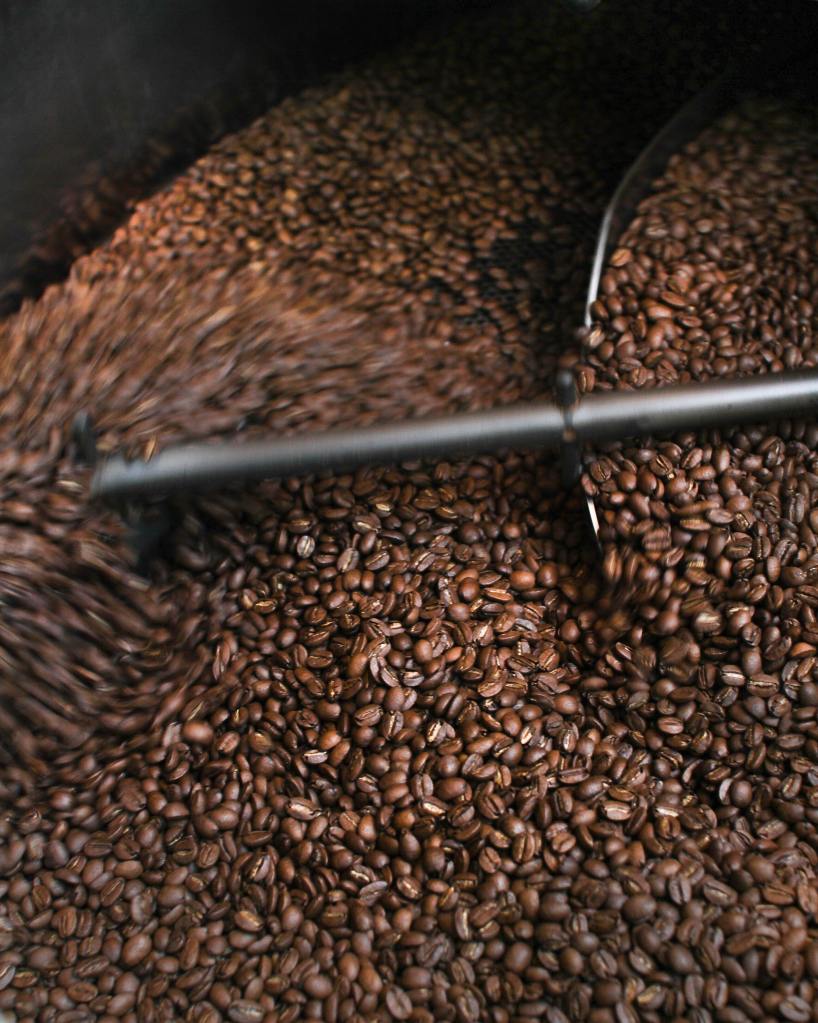
Venezuelan coffee grown in The Andes region, flavor profile:
- Sweet with just a touch of bitterness
- Smooth, rich
- Light-bodied
- Hints of caramel and nuts; Intensely aromatic
On the other hand, coffee grown in the eastern regions flavor profile looks a little more like this:
- Heavy body
- Strong, sweet taste
- Creamy
Once the coffee fruit has been picked, there’s at least two different approaches traditionally used by farmers themselves; One is the typical hands-on method: They pick the fruit, leave it to dry out in the sun, and they remove the beans from the coffee fruit by hand. This is called Dry Processing.
Then, there is the more specialized, industrial method. Since resources are still scarce in the country, this method is only done with the finest coffees grown in Venezuela; most of these are destined to the US, Germany, and Belgium.
This method is called Wet Method – after all the coffee fruit has been picked, it is then run through a machine that rapidly separates pulp and beans. The beans are then stored in vats – where they are allowed to ferment for a while. This allows the coffee beans to develop a more complex taste.
After this, they are thoroughly washed and dried.
So, there are two types of coffee classifications in Venezuela – the traditional, “normal” way and wet processing – which is called “lavado fino” (fine wash).
Coffee drinks and culture
In colonial times, coffee was considered a part of daily life; Each day had to start with a cup of black coffee, either watered down – what is called a Guayoyo, or sweetened with cane sugar.
So we see that for centuries, coffee and Venezuelan lives have been entangled in such a way that they are now inseparable from each other.
These are some of the most popular types of drinks from Venezuelan culture:
Guayoyo: This is the most popular coffee drink in Venezuela. It is pour over coffee, made by pouring near-boiling water on top of coffee – which sits on a filter (usually reusable, made from cotton). It is much like regular black coffee, but with even more water.
Guayoyo is so popular that street vendors can rely on this drink to survive; In crowded streets, on the subway, you’ll see people with big thermoses: This is to keep coffee hot the whole day – so that even if you didn’t get the chance to have coffee you can have some hot coffee on your way to work!
Tetero: Literally means “Baby bottle”. It is mostly frothed milk, with just a touch of espresso – and lots of sugar. You might get called a baby for ordering this.

Café con leche: You might be familiar with this term, as it is simply spanish for Latte. However, Venezuelan people are very specific when it comes to their coffee – so a Latte is rarely order. There are at least two different types of latte – ordered by color:
- Marrón claro: This is a latte with about half the usual amount of coffee, and the rest is milk. A drink meant for lightweights and children.
- Marrón oscuro: “Dark brown”; This drink is a latte but with a 1:1 ratio of milk to coffee – sometimes more.

Focusing on the color of their drink, Venezuelans order a latte in a very specific manner. It is also very common for a Venezuelan to be unsatisfied with their coffee – routinely asking for either more coffee or more milk in their drink.
Café con mantequilla: Now this is something a little more extreme. Way before things like Bulletproof Coffee existed, people were having coffee with butter. This drink is more common in rural places – black coffee is enriched with a little butter (5 to 10 grams) and then sweetened with refined sugar.
Calentadito: Venezuelans are known for their love of coffee – but they love rum almost as much. This drink is made with black coffee and rum. Ratios vary depending on how much you can tolerate, but it’s about 1:4.
The Search for Venezuelan Coffee
Owing to the dire economic crisis the country has been enduring for the last decade, Venezuelan coffee has been steadily disappearing from the international market – as well as the local market.
Lifelong coffee brands are now out of business, and most of the coffee consumed is distributed by local farmers – everything is off-brand and comes already ground to the country’s preference for making Guayoyo.
Very few authentic Venezuelan coffees can still be found – but you can still find it if you know where to look. Cafe Fress, for example, is a brand of coffee that was founded recently in the US by the same Venezuelan family that used to own the most prominent coffee brand in Venezuela; Fama de América, which is now owned by the state and not producing coffee at all.
Café Fress still owns coffee farms in Venezuelan land, and their coffee is processed the same way it was in the old days, giving you a real, authentic taste of Venezuelan coffee.
There’s also a new, small player in the market that has been making waves among local Venezuelan coffee enthusiasts, Barento. If you can get your hands on this coffee, you’ll see what all the fuss is about: This is true Venezuelan coffee of the highest quality. It owes its quality to the micro farms where the coffee is grown – where all the plants are cared for greatly, resulting in the only gourmet coffee the country is producing right now.

