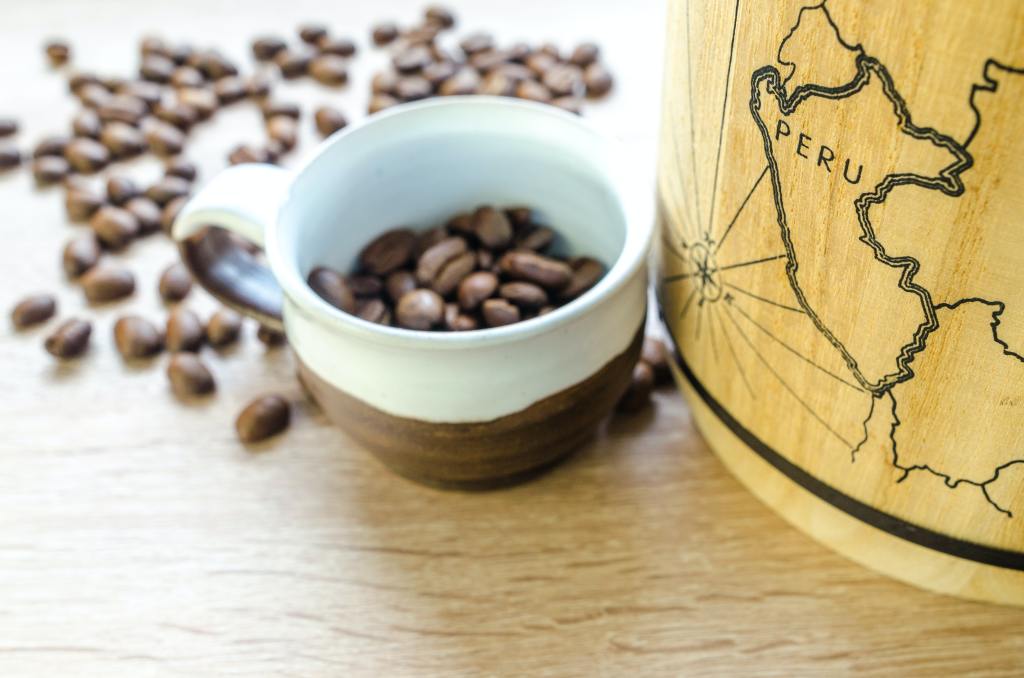
Peru is one of the most special countries of the continent: This is where one of the cradles of civilization emerged, The Inca Empire. Without any influence from other cultures, the Inca people developed their own unique traits that made them one of the greatest empires in the whole of history.
Even now, the population in Peru is made up mostly of ethnic tribes, or people of strong indian descent.
The history of coffee in Peru is one without a build-up: Although coffee did reach the country in the eighteenth century, around the same time that it reached every other country in the region, it was not considered very valuable among Peruvian farmers, therefore it wasn’t produced independently.
Popularity came to coffee in the twentieth century. Across South and Central America, many Eruopeans had come to settle – and wanted to make coffee their business, as they had seen firsthand how prosperous the market was in Europe. They came to Peru, too, and hired locals to help them grow coffee.
Business, of course, was good. Word spread around quickly and many small farmers (which was the overwhelming majority of farmers) started growing coffee themselves. Thus, in the spawn of half a century, Peru became one of the biggest players in the region.
The Quechua Farmers
The term “Quechua” refers not to a specific ethnicity, but to many different ones that people are sometimes unable to tell apart; even amongst the Quechua people. The Quechua are direct descendants of what was the Inca Empire: The native Indians of South America.
Nowhere have they endured more than in Peru; with a population once thought to be up to 6 million people in the seventeenth century, their numbers have greatly decreased. But it is here, in Peru, where they are more numerous with almost 4 million Quechua people living in the country. That’s a quarter of the population.
The Quechua people speak their own language -which varies with region, with Southern Quechuan being the most widely spoken- and spanish as a second language, sometimes very sloppy. Still – they are some of the most distinctive coffee farmers in the world.
Reclusive, as many native indians are, nobody is really sure what methods they use for coffee farming. One thing is for sure: They detest pesticides and big farming tools – which means that their coffee is about as organic as it can get, and the coffee cherries are all hand-picked.
FairTrade coffee in Peru
As pretty a picture it might have seemed so far, the coffee business in Peru has had some serious ups and downs. At the start of the 80s, the communist party of Peru, “The Shining Path”, declared themselves openly at war with the current government – mimicking guerilla-like groups that had been active in other countries of the region before.
To establish safe headquarters, they went to the most hard-to-reach place they could think of: The Andean Highlands. Exactly were most of the coffee was grown, and were a lot of farmers had lived for generations. Armed and determined to make their headquarters in hiding, they forced many farmers out of their land so they could occupy it themselves. Along with this ordeal which would last a decade, until the capture of their leader in 1992, the coffee international coffee market was seeing an increase in supply that, without a respective increase in demand, could only mean bad news.
Fair Trade coffee organizations were invented to counteract this serious crisis in worldwide coffee trade; Prices were too low, competition was nasty and farmers had to sell their harvest at depressingly low prices or come back home with no money at all.
Nowhere was this truer than in Peru, were a lot of the producers were poor Quechua farmers, who are one step further disconnected from the rest of society because of the language barriers and cultural differences – even between the Quechua and the City dwellers of Peru, there wasn’t much of an understanding.
But in the late 80s, Fair Trade orgs came into the country and who would have thought – there was a lot of work to do. Typically, the only ones who would want to be associated with Fair Trade are independent farmers who have no real chance of striking some sort of deal with a particular big customer, exporter, etc. This was very much the case with Quechuan farmers.
Thanks to this, a vast majority of Peruvian coffee is now FT certified. This means that these farmers are paid a fair wage for their labor – which, in turn, results in them being able to keep growing all-organic coffee, ensuring the best of qualities possible. That’s one of the reasons why Peruvian coffee is so well-regarded: It is consistently good because of good farming practices.
Present-day coffee culture of Peru
Nowadays, people in Peru love their coffee just as much as anyone else would. In the capital city, Lima, there are many cafés to be found (and a lot of Starbucks, too). During the last decade (2010s), owing to a period of mild political stability and economic growth, Peruvians have been able to enjoy coffee culture at its best.
Although they do seem to be a lot more conscious about coffee than most people: A lot of their cafés are eco-friendly and environmentally friendly – and there are more than a few industrial-sized roasters right in Lima, so cafés in the city get some of the freshest coffee possible.
Though unlike other South American countries, Peruvian people are much more fond of espresso over drip coffee or coffee made in Moka pot, which has led to the proliferation of coffee beans catering to espresso-lovers.

