Discover this rare brew
Deep in the jungle in the dark of night…
There lives a cat, or rather, a cat-like creature known as a civet. It loves to eat cherries. Coffee cherries to be exact. And what goes in, must, as they say, come out. And what comes out of this furry little creature’s hind quarters is coffee. Or rather, “civet coffee” known as kopi luwak. But what is kopi luwak? What is the controversy that surrounds it? And how can you enjoy an ethical and animal friendly cup of this coffee? Come and explore the deep jungle and far flung coffee plantations as we take a look at kopi luwak!
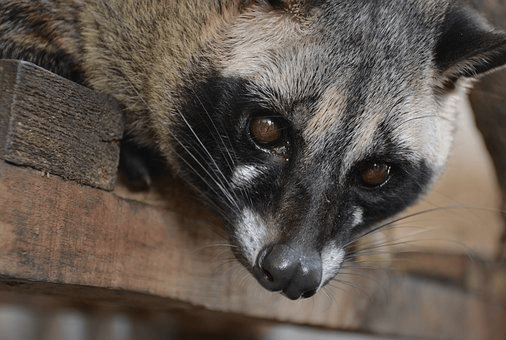
The origins of Kopi Luwak
To begin, let us take a look at what kopi luwak is in a bit more detail. While “civet poop coffee” is usually the highly condensed way of explaining this exotic type of coffee, it also lacks some more of the nuance that is important to truly understand what kopi luwak is.
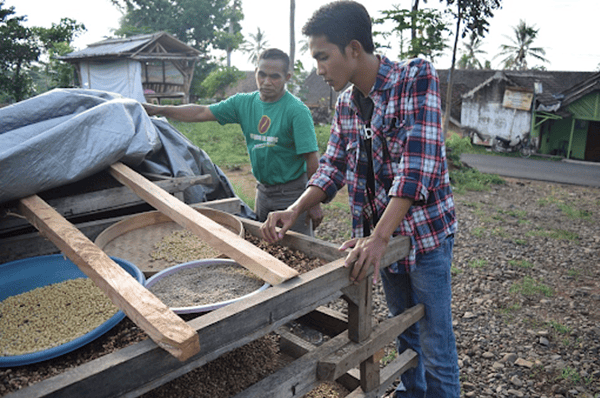
For starters “kopi luwak” is the Indonesian for “civet coffee”, and has its origins in the 18th century when Dutch coffee plantations began to be cultivated on various Indonesian islands as a cash crop. From 1830-70’s, native farmers and plantation workers were prohibited from picking their own coffee crops for their own coffee to enjoy. However, the native people soon noticed that various types of civets just so happened to snack on the coffee cherries, and in their droppings came out the coveted coffee seeds. So after collecting these “diamonds in the rough”, and thoroughly washing, cleaning, roasting and grinding them, discovered that this new civet coffee or, “kopi luwak” was mighty tasty. A discovery made through a very interesting loophole in the colonial laws of the time. Today, kopi luwak is produced all across Southeast Asia, with the largest production center for kopi luwak located in Sumatra in Indonesia. Other major centers for kopi luwak production are found in Vietnam and the Philippines.
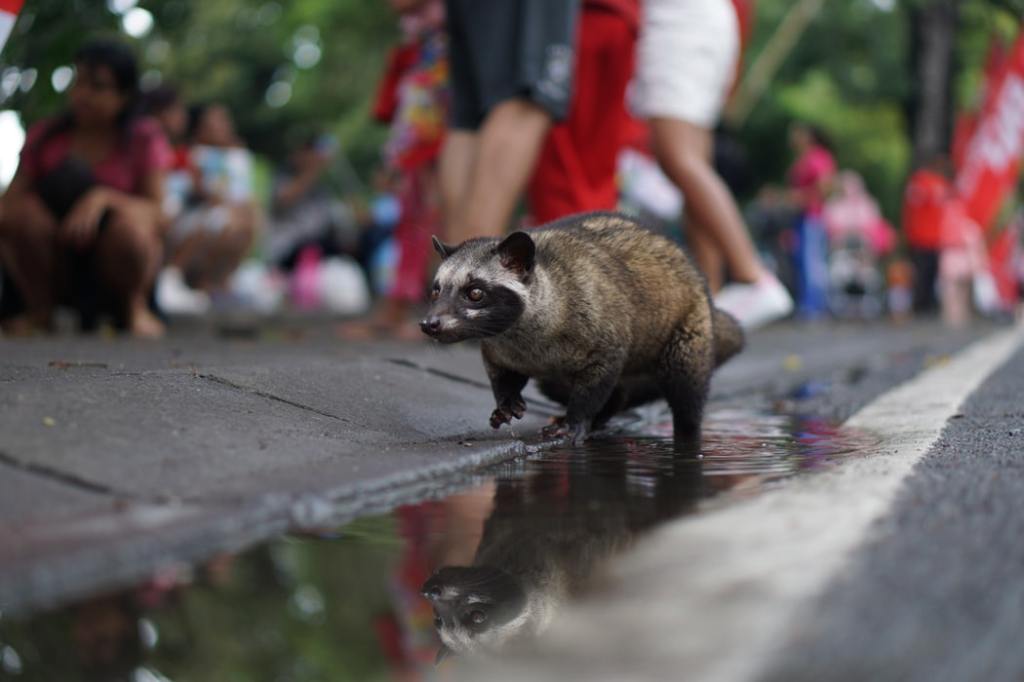
The coffee “cat”
Now let’s learn a little bit more about the luwak, or the Asian palm civet as it is known in English. The Asian palm civet is a weasel or stoat-like creature that is also known as a “civet cat”. But this is a misnomer as civets are in the viverrid family with other types of civets, rather than the feline family like true cats. The Asian palm civet is mostly nocturnal, coming out to play in the dark jungle. They love to eat fruit but are known to be omnivorous snacking on insects too from time to time. But it’s their love of fruit that is of interest because the bright red coffee cherries introduced by the Dutch caught the civet’s fancy and got them to try some for the first time when coffee crops were introduced to Indonesia. And they have been snacking on coffee cherries ever since.
When civet’s eat the coffee cherries, often times the best of the coffee crop, something special happens. The cherries are partially digested and allowed to ferment in the civet’s stomach before being “released” in clumps. Despite passing through the civet’s digestive track, the beans themselves are left mostly unscathed by any undesirable tastes, germs, bacteria or smells. In fact they come out the other end still intact and covered by a bit of a protective layer which is peeled off by whoever is processing the beans.
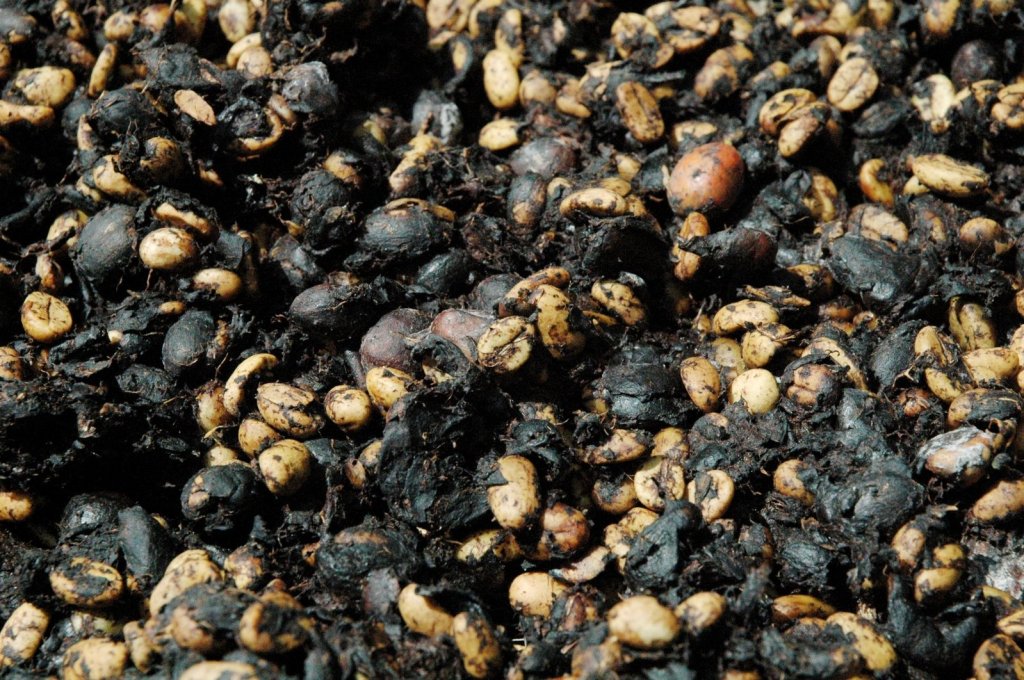
In addition to coming out fresh as roses, the subsequent washing and roasting of the beans thoroughly cleans off any possibly icky stuff that could have been left on the resulting coffee. What’s somewhat miraculous though is some Canadian studies found that even though the yucky stuff in the civet’s gut doesn’t make its way into the beans, some beneficial stuff found in the civet’s belly does. Some of the civet’s digestive secretions carry enzymes that break down the coffee beans proteins. This is cool because the result is higher amounts of amino acids in kopi luwak. Also, the fermentation that takes place in the civet’s tummy results in coffee that is low on the bitterness scale and has a smooth body, too.
(un)ethical kopi luwak
When kopi luwak first began, it was a product of coffee beans collected from the droppings of wild civets. The droppings would be found around coffee plantations and it had a kind of charm, a rarity to it like lost or hidden treasure that made it more coveted. This rising demand for kopi luwak resulted in the unfortunate state many civets end up in today. Kopi luwak farms often take part in civet trafficking, which threatens the wild civet population. The cherries that the civets are force fed are of poor quality, rather than the higher quality ones the wild civets would seek out on their nightly explorations of plantations. Civets are also cruelly kept in cages, or kept in enclosures that are too small. Civets stuck in enclosures get into fights with one another and experience a poor quality of life. Factory style kopi luwak farms may keep civets, which are nocturnal, under lighting for hours at a time, disturbing and disrupting their natural biorhythms.
In addition to the treatment of the civets, there is also a market for imitation or fraudulent kopi luwak. Because of kopi luwak’s rare, novel and highly unique character, unethical businesses will claim their coffee is authentic kopi luwak but in reality sell a much lower quality product that is in fact not civet coffee at all, or worse, attained through cruel and unethical practices.
Ethical kopi luwak
But luckily there are still authentic kopi luwak producers throughout Southeast Asia. These producers gather their product the traditional way, waiting for the wild civets to enjoy some high quality coffee beans, and then gather the “remains” later. While this method is not the most conducive to supplying a large consumer market it is certainly more ethical. The resulting coffee can be of higher quality, and the price is absolutely much higher, too. Ethically gathered kopi luwak i.e. beans gathered from wild civets rather than captured and force-fed civets can sell for prices of 100$ USD to 500$USD per kilogram. Cups of kopi luwak can also go for between 35$ USD to 80$ USD. The steep price comes not just from the coffee’s rarity, but also the high cost of production of these beans.
Additionally, in recent years some research has been done to make kopi luwak without harming or even involving the civets at all. The reason for this method of production includes sparing the civet population while also yielding a mass product of kopi luwak. The methods involved to produce this “civet-less” civet coffee includes utilizing sophisticated fermentation techniques and enzyme soaks, like the ones used by the University of Florida and various civet coffee companies in Vietnam, respectively.
Deep in the jungle, where the wild civets roam…
The humid, vibrant jungle. Just as alive at night as during the day. It is here where the wild civets sneak over to the coffee plantations and farms. And steal a couple of tasty coffee cherries! The result is true kopi luwak. A unique, exotic, marvelous type of coffee. This is certainly a bit more exciting than a standard shot of espresso! But also a bit pricier, too. When it comes to seeking out kopi luwak, make sure to do your homework and try your best to verify where it comes from and how it’s made. Be aware, both imitations and unethical methods of attaining kopi luwak are out there, and they are unfortunately far too plentiful. But by searching high and low, far and wide, and preferably, at its source in Indonesia and other locales in Southeast Asia, maybe someday you too can discover this rare and certainly one of a kind type of coffee! But in the mean time, it is certainly a cup of Joe to add to the bucket list.
Sources:
l “100% Wild Kopi Luwak Coffee.” Kopi Luwak Direct, kopiluwakdirect.com/.
l “Kopi Luwak.” Wikipedia, Wikimedia Foundation, 27 Nov. 2019, en.wikipedia.org/wiki/Kopi_luwak.
l “Our Commitment to 100% Wild Kopi Luwak Sourcing.” Gayo Kopi Luwak, gayokopi.com/our-commitment/.

